Cornerstone Definitions
What Is a Bra? The Anatomy of Every Modern Bra Explained
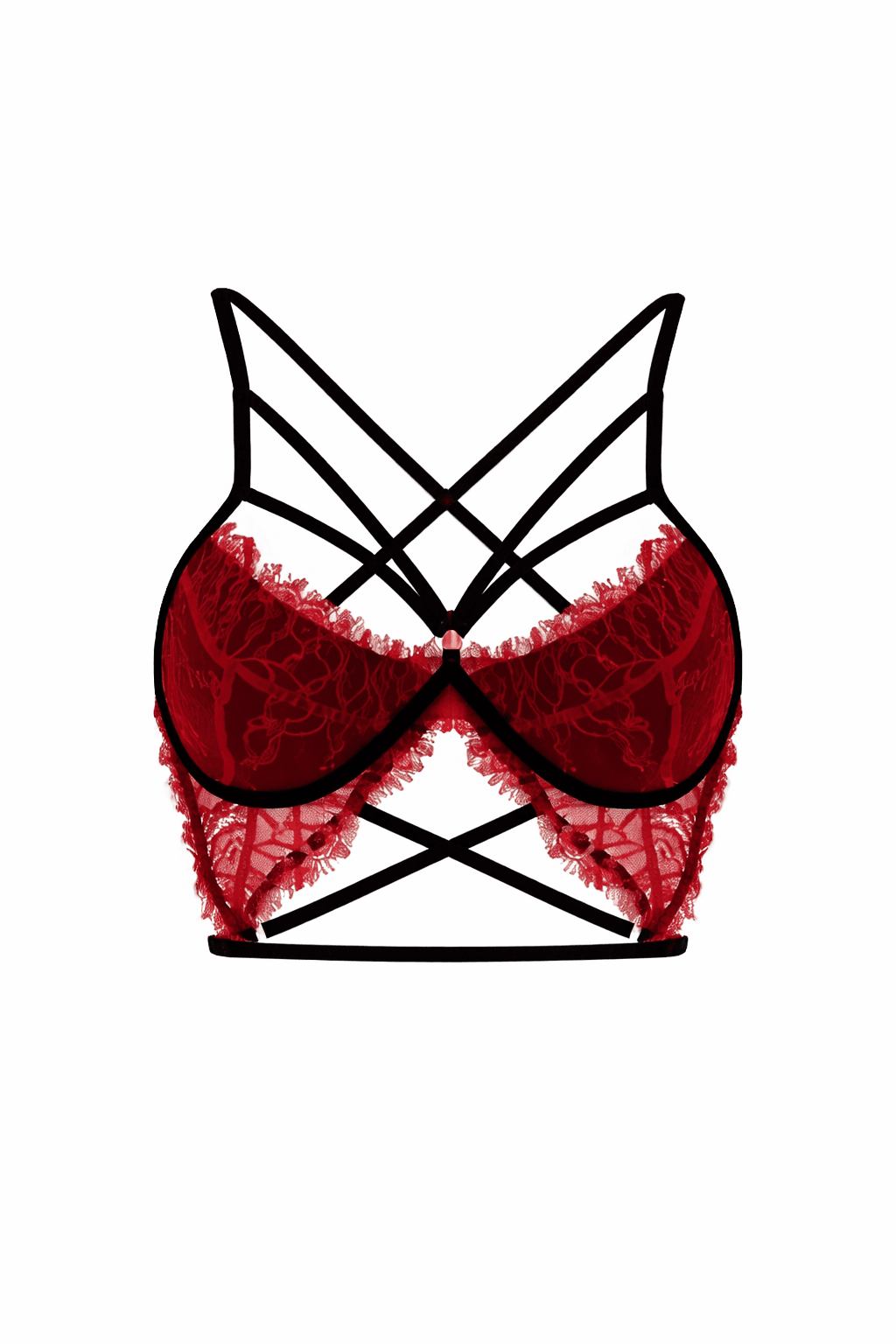
A bra is a structured undergarment built from seven distinct parts that work together to support, shape, and frame the bust. Knowing what each part does is the foundation of buying a bra that actually fits, particularly on a plus-size body where the engineering matters more than on smaller sizes.
This guide is the anatomy reference. Use it to decode product descriptions, diagnose fit problems, and shop with confidence.
The Seven Parts of a Bra
- The band: the horizontal strip that goes around the rib cage, including the back panel and the front section under the cups. The band carries roughly eighty percent of a bra's support.
- The cups: the two shaped sections that hold the bust. Cups vary by depth, projection, shape, and construction (molded, soft, padded, push-up, no padding).
- The gore: the small triangular or trapezoidal section between the two cups, sometimes called the centre front. The gore should sit flat against the breastbone in a well-fitting bra.
- The straps: the two pieces that go over the shoulders. Straps are not the main support system. They keep the cups in position; the band does the work.
- The closure: the hook-and-eye fastening at the back, typically two, three, or four hooks. More hooks distribute tension and last longer.
- The wire (if present): the curved support beneath each cup, made from coated metal or plastic. Underwire follows the inframammary fold (the crease where the bust meets the chest).
- The wings: the side panels of the band that connect the cups at the front to the closure at the back. Wings provide structure to prevent rolling.
Why Each Part Matters More on Plus-Size Bodies
The band
The band carries the support load. On plus-size bodies, this load is significantly greater, which means a band engineered for the size matters more, not less. Plus-size bands are typically wider (between three and five centimetres at the back) than straight-size bands (two to three centimetres). The wider band distributes pressure and prevents the band from rolling up the back.
The cups
Cup engineering is where mass-market brands cut the most corners on plus-size pieces. Real plus-size cups have three or four sectional seams (rather than the two-piece molded cup typical of smaller sizes) so the cup can shape the bust into a lifted, supported position. The cup depth (front-to-back projection) is engineered separately from cup width to accommodate different breast shapes.
The gore
On a plus-size body, a gore that does not lie flat is the single most common fit problem. The cause is almost always a band that is too small or cups that are too small, both of which push the gore away from the chest. See common bra fit problems for the diagnosis flowchart.
The straps
Straps that dig into the shoulders are almost always a band problem, not a strap problem. When the band is too loose, it migrates up the back, and the straps end up carrying weight they were never meant to carry. The fix is a tighter band, not wider straps. Plus-size bras should still have wider straps (typically 1.5 to 2.5 centimetres) for comfort, but width alone does not solve digging if the band is wrong.
The closure
Plus-size bras typically come with three or four hook-and-eye rows. Three hooks is standard for plus-size everyday bras. Four hooks appears on full-bust bras and longline bras. The multiple hooks distribute the closing tension across a wider area, preventing the closure from digging in and reducing the rate at which the band loses elasticity.
The wire
Underwire is one of the most misunderstood parts of a bra. Wire that pokes, pinches, or rides up is almost never the wire's fault. It is the wrong wire shape (too narrow or too wide for your bust) or the wrong band size pushing the wire out of position. For the full underwire diagnosis, see underwire pain in plus-size bras.
The wings
Wings should sit smoothly against the body without rolling, gathering, or creating bulges. The combination of fabric tension, panelling construction, and elastic content in the wings determines whether the bra creates back smoothness or back bulge. See how to stop bra back bulge for the full breakdown.
Cup Construction Types
Within the cups themselves, there are several distinct construction methods, each with different effects on shape and support.
| Construction | What it does | Best for |
|---|---|---|
| Molded cup (foam-shaped, single piece) | Smooth, seamless surface that creates a uniform shape under clothing. | T-shirt bras, fitted-top wear, sizes A through DD. |
| Sectional cup (multiple seamed panels) | Multiple panels engineered to lift and shape larger busts. Provides genuine support without padding. | Plus-size everyday bras, full-bust support, sizes D and above. |
| Padded cup | Light foam or fibrefill added to round and lift. Adds about a half-cup of visual size. | Smaller busts wanting more shape, modesty under thin fabrics. |
| Push-up cup | Heavier padding angled at the bottom and sides to push the bust up and toward the centre. | Cleavage enhancement, occasion wear, sizes B through D. |
| Soft cup (no padding) | Just the fabric of the bra without internal padding. Reveals the natural shape. | Everyday comfort, larger busts that need no enhancement, lounge use. |
| Demi cup (cut shorter at the top) | Covers roughly half to two-thirds of the bust, leaving more upper-bust visible. | Lower necklines, plus-size daily wear with a flattering cleavage line. |
The Bra Sizing System
A bra size has two parts: a band measurement (a number) and a cup volume (a letter). The band number reflects your underbust measurement in inches (US/UK) or centimetres (EU). The cup letter reflects the difference between your underbust and your full bust measurement.
Critical: the cup letter does not represent absolute bust volume. A 32D and a 38D have completely different cup volumes. The same cup letter on a different band represents a different physical size. This is the foundation of the sister-size concept (a 34D and a 36C are 'sister sizes' with the same cup volume but different bands). For the full math, see sister sizes explained.
If you have never been professionally measured or your last fitting was over two years ago, our bra size calculator and how to measure your bra size walk through the precise method.
What Separates a Good Bra from a Forgettable One
- The band stays parallel to the floor and does not ride up the back.
- The gore (centre piece) sits flat against the breastbone with no air gap.
- The cups contain the entire bust with no spillover at the top, sides, or bottom.
- The straps stay in place without digging into the shoulders, even after eight hours of wear.
- The underwire (if present) sits on the rib cage along the inframammary fold, not on the bust tissue.
- The fabric does not pucker, gather, or wrinkle.
- The cups create a lifted, separated shape rather than a uniboob or sagging silhouette.
- There are no red marks, indentations, or pressure points after wearing the bra for several hours.
If a bra checks all eight, it fits properly. If it fails any one, see how a bra should fit and the twelve most common bra fit problems for the diagnostic walk-through.
Frequently Asked Questions
- What are the parts of a bra called?
A standard bra has seven parts: the band (around the rib cage), the cups (holding the bust), the gore (centre piece between cups), the straps (over the shoulders), the closure (hook-and-eye at the back), the wire (under each cup, if present), and the wings (side panels connecting cups to closure).
- How does the band size on a bra work?
The band number reflects your underbust measurement. In US and UK sizing it is given in inches; in EU sizing it is given in centimetres (the EU equivalent of a 34 band is roughly 75). The band carries about eighty percent of a bra's support, which is why getting the band size right is more important than getting the cup size right.
- Why does the cup letter mean different sizes on different bands?
The cup letter represents the difference between your underbust and your full bust, not an absolute volume. A larger band size with the same cup letter has a physically larger cup. This is why a 32D and a 38D are not the same cup volume, and it is the basis for the sister-size system that lets you find your fit across multiple band-cup combinations.
- What is a sectional cup bra and why is it better for plus sizes?
A sectional cup is constructed from three or four seamed panels rather than a single molded piece. The seams allow the cup to shape the bust into a lifted, separated, supported position. For larger cup sizes (typically D and above), sectional construction provides significantly more support than molded foam can deliver. Most plus-size full-bust bras use sectional cups.
- Should plus-size bras have wider straps?
Yes. Wider straps (typically 1.5 to 2.5 centimetres versus 1 to 1.5 centimetres on straight-size bras) distribute weight across a larger shoulder area and reduce shoulder grooving. However, wider straps alone do not fix shoulder pain. The band has to be tight enough to do its job; if the band is too loose, even the widest straps will dig in.